 EN


How Do You Choose Bath Towel Sets Wholesale for Hotel Projects?
2026/11/19
A hotel buyer's guide to bath towel sets wholesale. Covers set composition, GSM tiers, GB/T 22800-2023 checks, colorfastness, shrinkage, and cost per use.
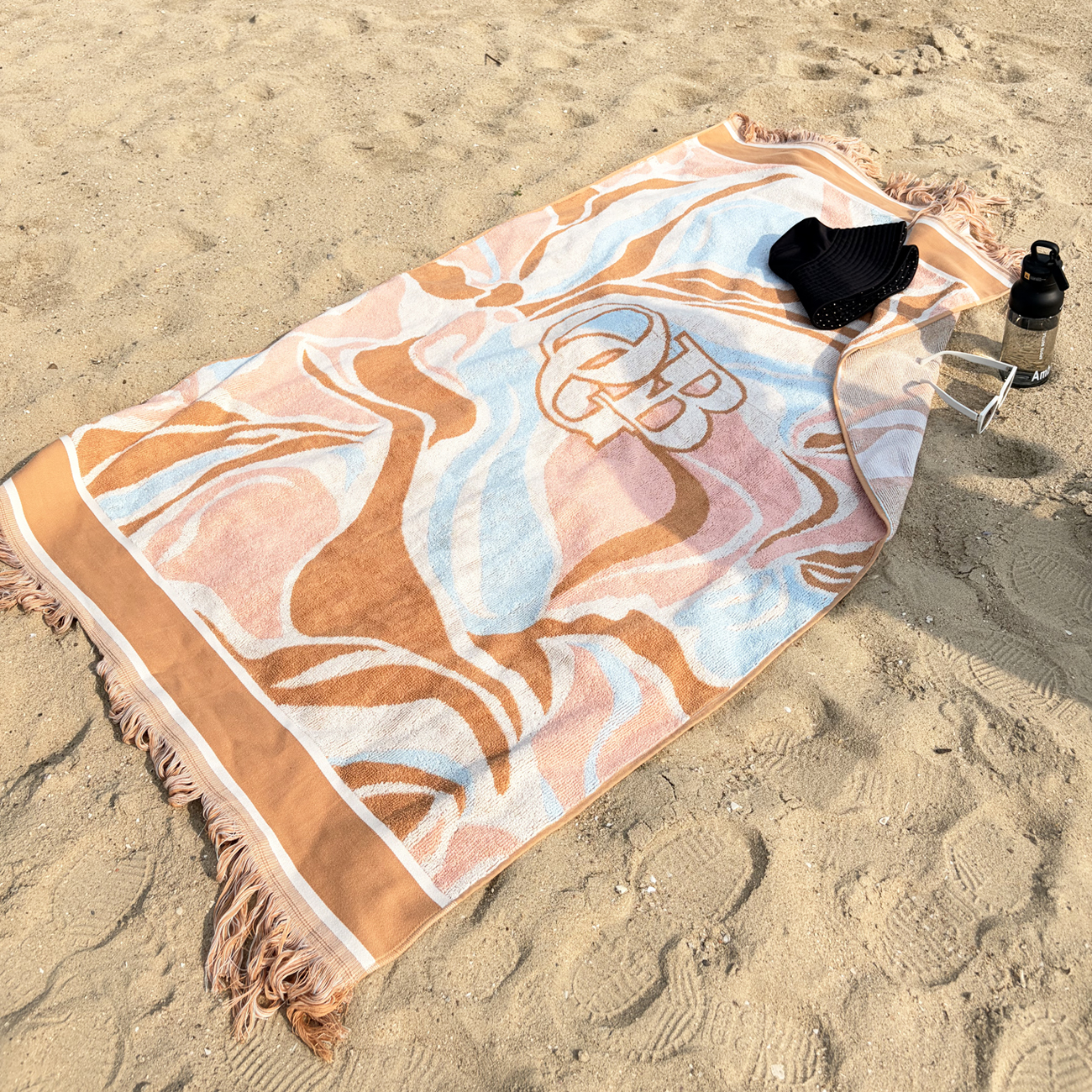
A buyer once sent over a photo of a “premium” wholesale beach towel that had turned from teal to a patchy grey after a single afternoon by the pool. The towel came with a neat little care label. It meant almost nothing. Colorfastness on a beach towel is tested at the fiber level, against specific stressors, under controlled conditions. A wash symbol does not tell anyone how the dye behaves when it meets chlorinated water, salt, UV radiation, and sunscreen residue in the same afternoon.
That distinction matters more at the wholesale level, because the gap between a passing lab report and a towel that survives a real beach season is often a single variable: whether the testing covered the right exposures or only the easy ones.
A beach towel is not a bath towel that happens to travel. The exposure profile is fundamentally different. It sits in direct sun for hours, gets wrapped around a wet body that has just left chlorinated pool water, absorbs seawater, gets dragged across sand, and then spends time bunched up in a hot car before the next wash. Each of those conditions attacks dye through a different mechanism.
UV radiation breaks the chemical bonds in the chromophore, the part of the dye molecule responsible for color. Active chlorine oxidizes dye structures, and the effect compounds with heat and moisture. Sodium chloride in seawater does not usually destroy dye outright, but it changes the ionic environment around the fiber surface and can drive dye migration, especially on cotton terry with a heavy pile. Rubbing, both dry and wet, tests whether dye sits on the surface or has actually bonded to the fiber. A towel that passes a basic laundering test can still fail every one of those beach-specific stresses.
The testing landscape splits into two major systems, ISO and AATCC, and wholesale buyers run into both depending on where the towel is produced and where it will be sold. The table below puts the beach-relevant tests side by side so the differences are visible without digging through standards catalogs.
The chlorinated water figure is worth pausing on. ISO 105-E03 specifies 20 mg/l for beach accessories, while swimwear is tested at 50 mg/l and 100 mg/l because swimsuits sit in pool water far longer and more repeatedly. A towel tested only to the swimwear concentration is not over-tested, but a supplier presenting a high chlorine rating without naming the concentration has not told the buyer anything usable. The test condition is the result.
The most common failure in wholesale beach towel colorfastness is not a bad dye. It is a good dye applied to an inconsistent substrate. Terry cloth is a pile fabric, and the loop density, yarn twist, and moisture content at the dye bath all change how much dye the cotton actually takes up. Two batches can use the same reactive dye recipe and come out with different fastness because the yarn was sourced from different spinning lots with different wax or pectin content.
A scenario from a towel mill in Jiangsu makes the point. A production run for a hotel pool program used the same dye formula across three fabric lots. The first lot passed wet crocking at grade 4. The second dropped to grade 3 on the darker shade, and the third showed visible staining on the multifiber strip after the chlorinated water test. The root cause was not the dye. The third lot had been woven from a yarn batch with a higher residual wax content, which blocked dye penetration at the fiber core. Surface dye looked correct under D65 lighting, but it had not fixed where it needed to. The corrective action was a revised scouring step before dyeing, not a new color formula.
That is the kind of engineering detail a lab report does not show. It is also why colorfastness testing at the wholesale stage has to be tied to lot traceability. A test result on a swatch from one production day says very little about the container loading next month unless the fabric inputs are controlled.
Grading happens on a 1 to 5 scale. For shade change, 5 means no visible change and 1 means severe change. For staining, the same scale applies to each fiber strip on the multifiber adjacent fabric, and half grades are common. A grade 4 on chlorinated water sounds strong, and for many retail programs it is. But the number is only meaningful when the buyer knows the exposure condition, the assessment lighting, and whether it represents a single specimen or a batch average.
Light fastness grading adds another layer. Results are often expressed against blue wool references, where a higher blue wool number indicates a slower rate of fading under the same exposure. A towel rated against blue wool 6 will hold color longer in strong sun than one rated against blue wool 4, but the actual hours of real sun exposure behind that rating depend on the test duration and the irradiance level. Quoting a blue wool number without the test method is like quoting a car’s top speed without saying whether the engine was running.
There is also an honest limitation to state plainly. Lab tests are accelerated simulations, not guarantees. A towel that passes ISO 105-E03 at 20 mg/l will handle normal pool use, but repeated soaking in a poorly maintained hot tub with high chlorine and high pH can still degrade the color faster than the test predicts. Colorfastness testing reduces risk. It does not eliminate the effect of how the end user treats the product.
A workable wholesale testing protocol starts before the bulk run, not after. The first step is to require a pre-production lab dip or sample towel tested to the specific beach-relevant methods, with the test report naming the standard, the exposure condition, and the grade for both shade change and staining. A single “pass” stamp is not enough.
The second step is to tie the approved test to a production lot and repeat a reduced test set at the start, middle, and end of the run. For printed towels, wet crocking and chlorinated water deserve extra attention because print paste sits on the surface differently from dyed pile. For dark shades, light fastness and wet rubbing are the usual weak points. The test menu should follow the risk, not a fixed checklist.
The third step is to build a small real-world check alongside the lab data. Wash a production towel three times at 40°C with normal detergent, soak it in salt water for an hour, and line-dry it in direct sun. That is not a substitute for ISO or AATCC testing, but it catches the gap between a controlled lab specimen and a finished towel with seams, hems, and a printed panel.
Mofisi, a Jiangsu-based textile manufacturer working in towels and beach robes since 2004, runs colorfastness checks as part of its bulk quality flow, with lot-level traceability back to fabric inputs. The advantage for a wholesale buyer is not a single certification number. It is the ability to connect a test result to the actual yarn, dye lot, and finishing line behind a shipment, which is where most color problems begin and where most of them can be stopped.
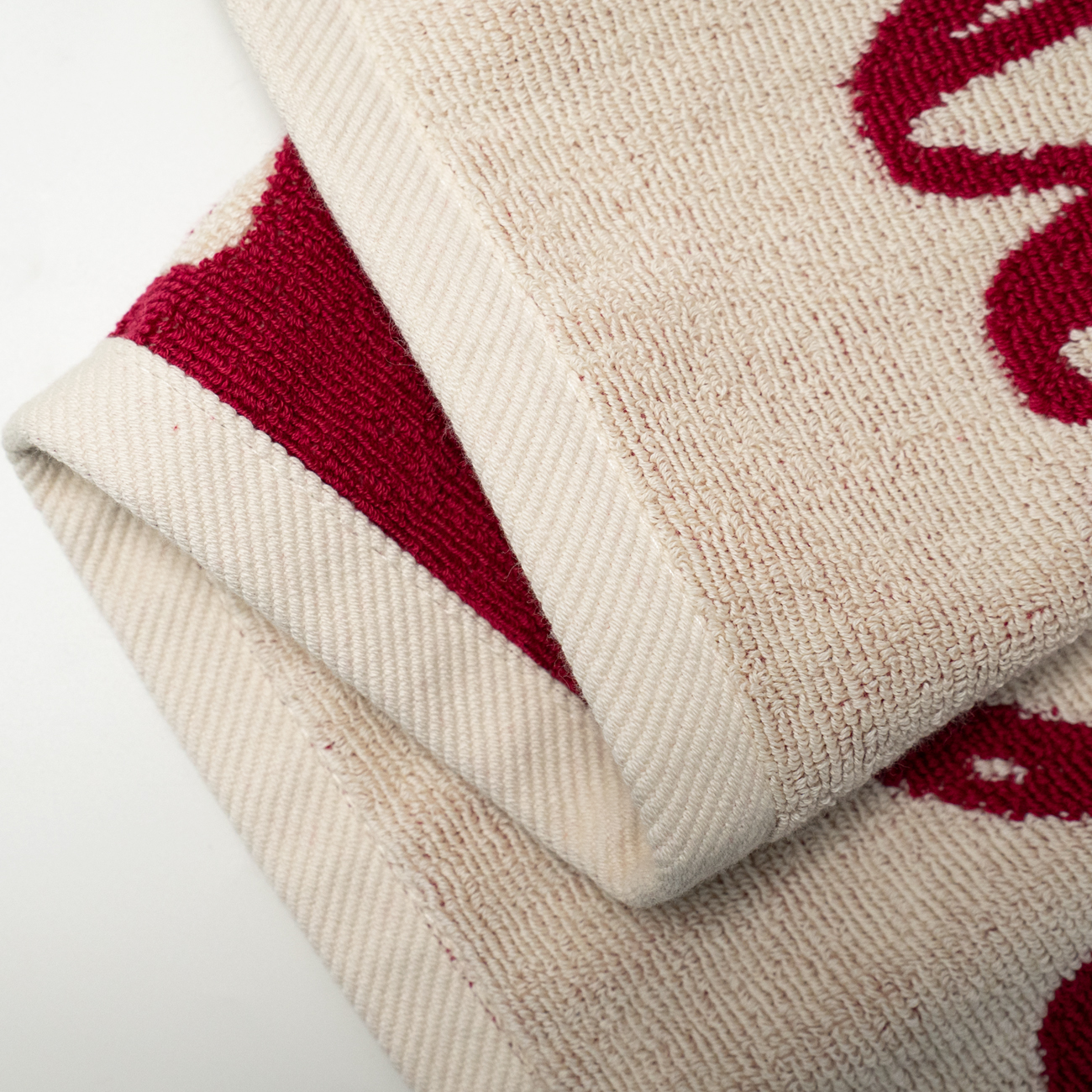
2026/11/19
A hotel buyer's guide to bath towel sets wholesale. Covers set composition, GSM tiers, GB/T 22800-2023 checks, colorfastness, shrinkage, and cost per use.
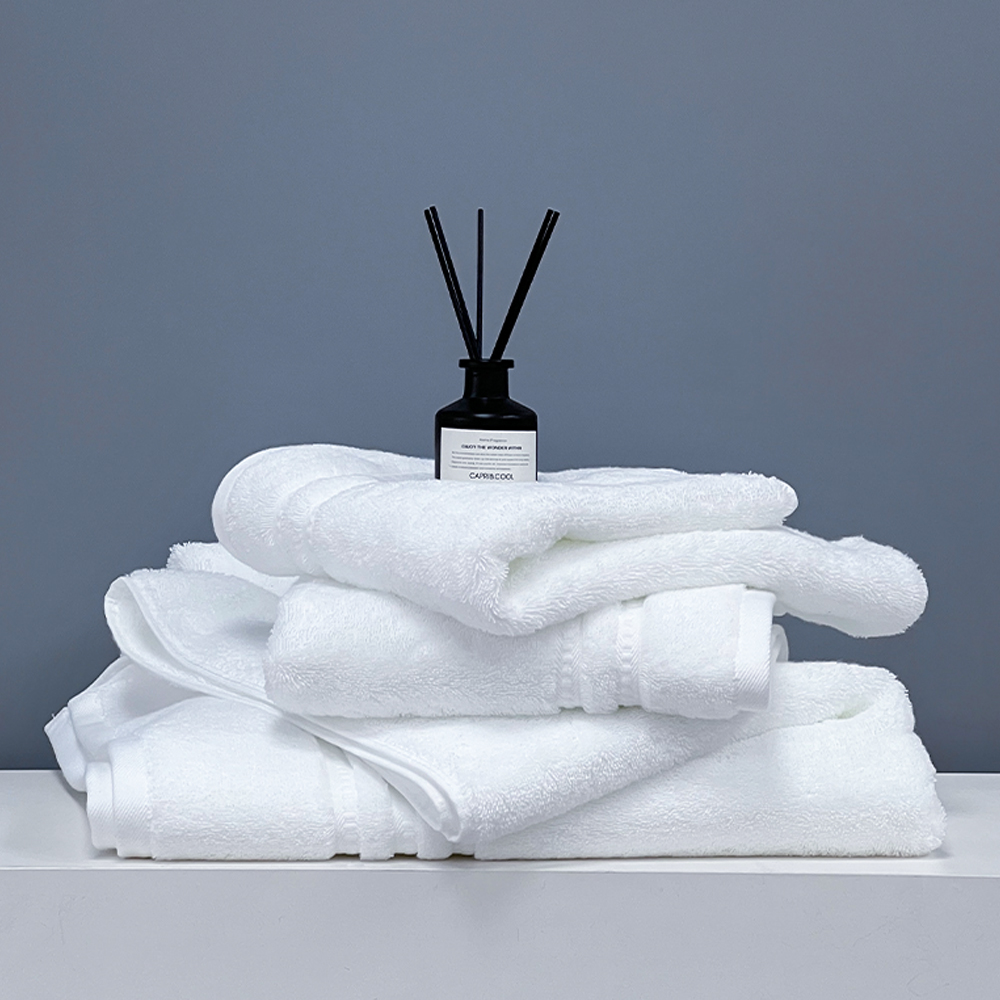
2026/11/19
Build a reliable hotel towel wholesale supply chain. Covers GB/T 22800-2023, verification protocols, contracts, and wash-cycle validation.
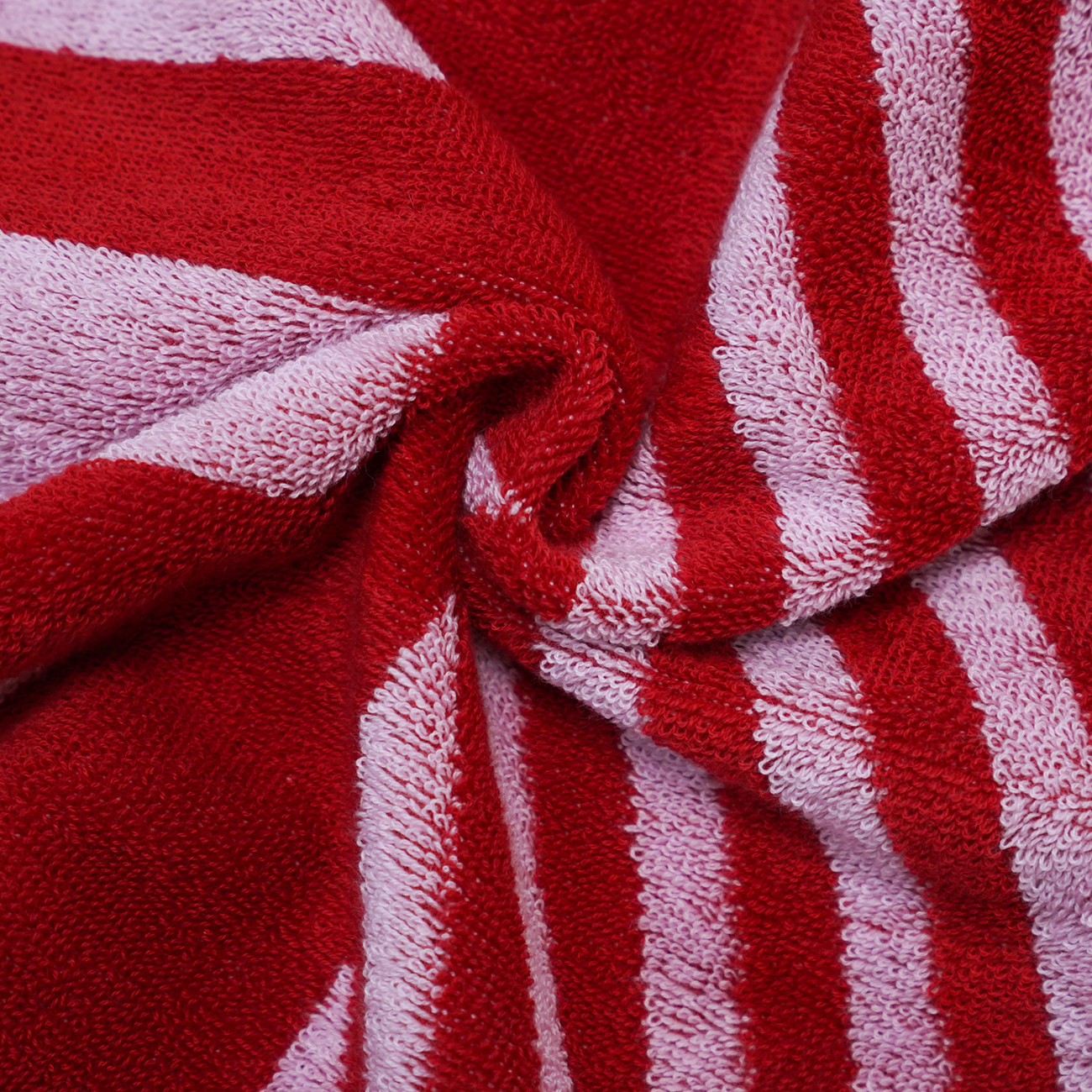
2026/11/19
Six common mistakes in hotel towels wholesale procurement. Covers cost-per-use, GSM verification, wash testing, sample sealing, colorfastness, and contract terms.
2026/11/19
Guide to certifications for hotel towels wholesale. Covers OEKO-TEX, GOTS, OCS, BSCI, SMETA, ISO standards, and regional compliance requirements.
2026/11/19
Guide to bath towel sets wholesale for hotels. Covers GSM, cotton grades, yarn count, loop height, and supplier wash-test verification.
2026/11/19
Learn how to specify stitch density for custom embroidered bathrobes. This guide covers SPI, stabilizers, and digitizing to prevent fabric stiffness in hotel robes.
